Under a non-disclosure agreement
Some of the details in this case study may be vague to protect the client's intellectual property.
Subscribe & Save
LOVEVERY
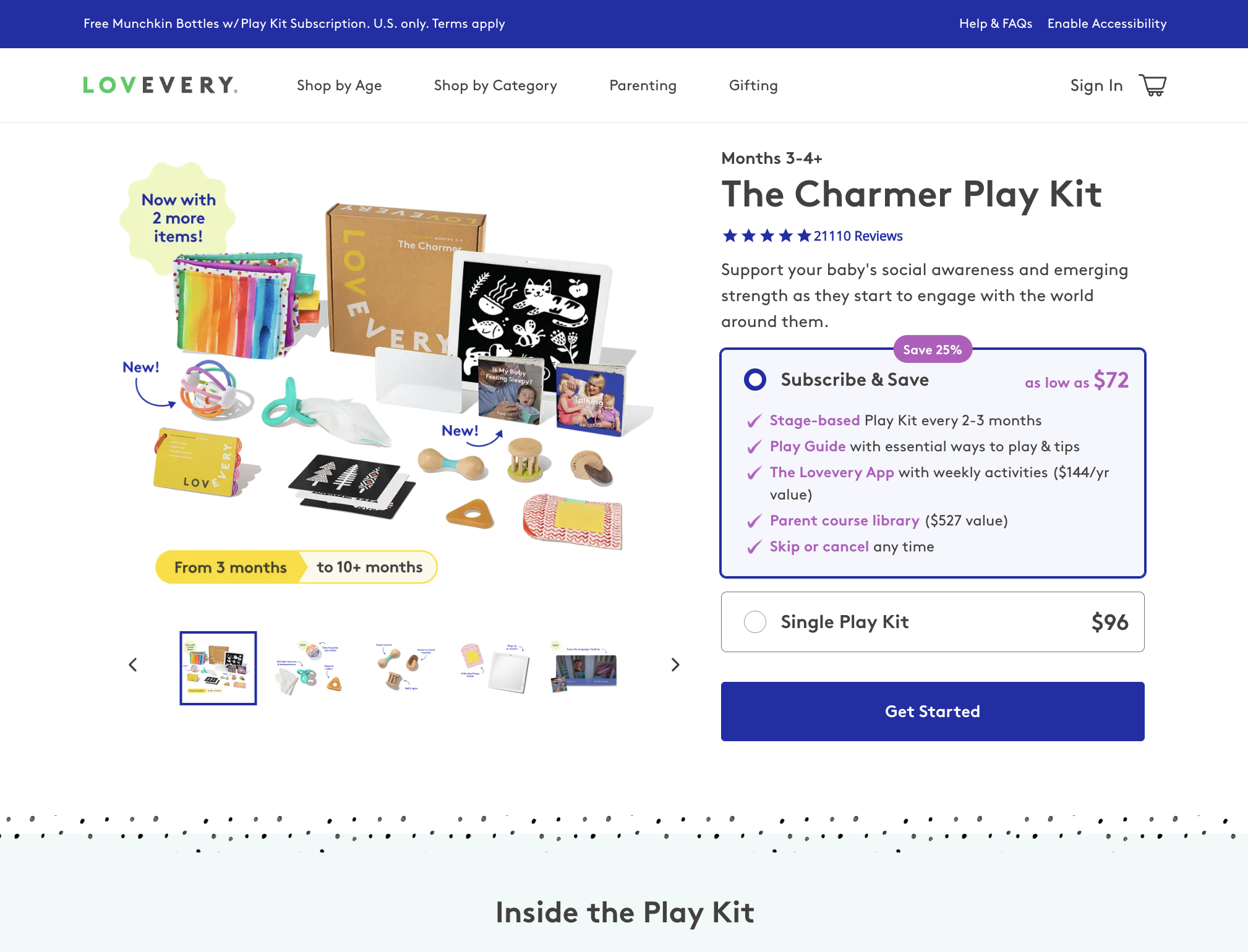
Play Kits were historically only available through subscription, which forced every customer into a high commitment path regardless of their purchase intent. As interest in flexible purchasing increased, the team set out to reduce decision friction on the PDP, support multiple buying behaviors, and increase overall conversion while reinforcing subscription as the best value.
My Role
Agile squad design leadership
UX strategy for the PDP purchase decision
Interaction and information hierarchy design
Competitive interaction audit
UX measurement framework definition with data partners
UI design and rapid prototyping
Understanding the Problem
What we know
[X]% of users dropped at the subscription commitment step
[X]% of new customers wanted a way to try a Play Kit before subscribing
[X]% of surveyed customers cited lack of flexibility as a reason for not purchasing
Competitors had already introduced one time purchase options
The existing flow required a commitment decision before users fully understood the product value

Customer Issues
Through behavioral data analysis, user research, and funnel drop off review, we identified key friction points:
Users were forced into a subscription decision too early in the journey
The checkout experience was too long for low commitment buyers
There was no fast path for gifting or trial behavior
Pricing did not clearly communicate why subscription was the better value
High intent and low intent users were treated the same
Insight: The primary barrier was not price. It was commitment.
Snapshots from the data used to inform the replacement parts shop as a siblings solution.
Mapping Barriers to Success with Partner Input
After aligning stakeholders on the self-service shop concept, I interviewed CX and Ops teams to understand replacement part fulfillment and supply chain friction. Key issues included:
Time: 67% of customer service inquiries were replacement requests
Cost: Variable pricing caused long negotiations and high labor costs
Compliance: Unclear distinction between defects and safety concerns
Supply chain: Inefficient systems required labor-intensive handling
Data management: Poor tracking and pricing systems
These challenges drove significant annual losses and were worsened by inconsistent internal protocols.
Scenes from stakeholder interviews with CX and Ops stakeholders
Designing & Validating the Self-Service Shop
With customer and business needs defined, I created mockups for the self-service replacement shop based on core product requirements.
Key features:
Subscriber login to access only previously purchased parts
Visual search to compensate for site limitations
Clear naming and imagery for each part
Tools to bundle multiple parts across Play Kits
We partnered with a user researcher to test with five active subscribers expecting a second child or with multiple children, evaluating ease of understanding, product discovery, and purchase completion.
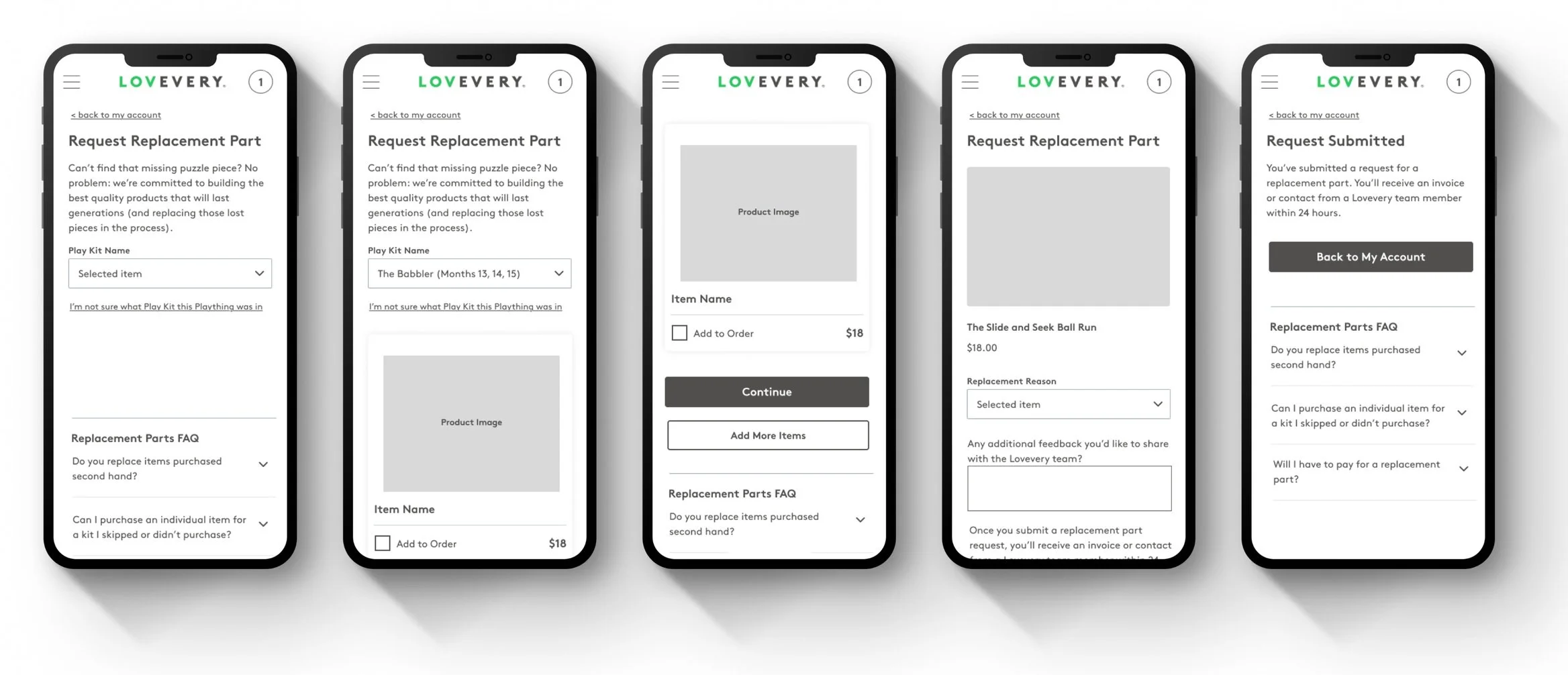
Early concept wireframes
Medium fidelity prototype for testing
Creative Strategy: Photography & Product Organization
Images were refined based on user research, improving visibility in visual search.
User testing showed visual search was the most effective way for subscribers to navigate replacement parts. To optimize findability, I guided the creative team to photograph parts clearly and distinctly.
We also cleaned up internal inventory names, replacing vague labels (e.g., FELTBALL_TEAL27) with descriptive ones, and used these lists to group products in ways that met customer needs and could be operationally fulfilled.
We adjusted groupings after CX feedback, combining figures and cards since customers often request them together.
A high fidelity solution
The final replacement parts shop features a visual search with clear product images, immediate shipping, and backorder/out-of-stock indicators. Beta testing prompted FAQ updates after CX noted inquiries about unlisted items.
The shop is scheduled to launch in August 2024.
